
Send to a Friend   Printer Friendly   Save in My Connection   

Revised Edition: What Every Pregnant Woman Needs To Know About Cesarean Section (2006)


About What Every Pregnant Woman Needs to Know About Cesarean Section


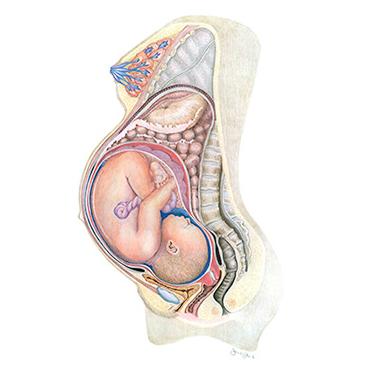
Although most pregnant women are healthy and have good reason to expect uncomplicated childbirth, the U.S. cesarean rate is at a record level and rising. The increase is due to many medical, legal, social, and financial factors, including "defensive medicine" and changing attitudes of caregivers and pregnant women.

To help pregnant women understand harms and benefits of cesarean delivery compared with vaginal birth and make wise decisions, Childbirth Connection worked with many leading national organizations and individual childbirth educators, consumers, doctors, labor support professionals, midwives, nurses, and researchers. We sorted carefully through hundreds of studies to identify the full range of concerns that are at stake in decisions about how to give birth. Then we put together a comprehensive booklet that can help you learn about the issues, plan carefully, and make informed decisions.

What Every Pregnant Woman Needs To Know About Cesarean Section helps a pregnant woman understand:
  • maternity care trends that may influence her birth
  • her legal right to "informed consent" and "informed refusal"
  • what is at stake in the decision about whether to have a vaginal or cesarean birth
  • situations that can lead to surgical birth
  • tips to follow in pregnancy and at birth to increase her chances for a safe and healthy birth.
Download What Every Pregnant Woman Needs to Know About Cesarean Section (C-Section)
Click to download our
free cesarean booklet


The best way to use the cesarean booklet is to read it early in pregnancy, use it to make your plans, and go back to it as needed. You can use it to discuss the issues with your partner and your doctor or midwife. If a topic is difficult to understand, ask your caregiver for help.

The 2006 revised edition updates rates of cesarean and other procedures, the list of endorsing organizations, and website addresses. We have also added more details to the companion at-a-glance summary comparing risks of cesarean and vaginal birth.

Spread the word about how to avoid unnecessary cesarean section

cesarean section booklet flyerDownload the cesarean booklet flyer (PDF) and spread the word about how to avoid unnecessary c-section. You can distribute it at events, in mailings, attach it with an email and spread the word to help women make informed decisions about cesarean section and protect themselves and their babies. Cesarean Trends: Graphs and Links also gives up to date c-section resources on the rising U.S. cesarean rate.

Many organizations have endorsed this cesarean booklet

Many consumer and professional groups recognize the importance of helping women make informed decisions about cesarean and vaginal birth. Over 30 non-profit organizations have officially endorsed the new booklet. Click here for a current list of endorsing organizations.


How were conclusions drawn? How was this booklet on cesarean section developed?

To learn about the scientific basis for information in the cesarean booklet, read an article describing why and how we carried out a scientific review and what we found (PDF).

To learn in detail how we developed the information in the booklet, you can download the following:

Most recent page update: 7/3/2008


© 2010 Childbirth Connection. All rights reserved.

Childbirth Connection is a national not-for-profit organization founded in 1918 as Maternity Center Association. Our mission is to improve the quality of maternity care through research, education, advocacy and policy. Childbirth Connection promotes safe, effective and satisfying evidence-based maternity care and is a voice for the needs and interests of childbearing families.
News and Features

"2020 Vision" and "Blueprint for Action" Reports Available
Leaders from across the U.S. health care system have prepared several reports for improving the maternity care system.
Learn about Transforming Maternity Care project
Read the "2020 Vision"
Read the "Blueprint for Action"
Read the Consumer Workgroup report
Help implement Blueprint recommendations

Rising Maternal Mortality
Analysis of maternal mortality data for the state of California, with 14% of the nation's births, strongly suggests that maternal mortality is increasing in tandem with rising rates of cesarean section and obesity.
Read article about maternal mortality in California 
Read companion Q&A 

Maternity Care Fact Sheet Available
A new fact sheet (12/09) summarizes U.S. maternity care trends and figures from the latest federal reports. The fact sheet updates background information in the 2008 Milbank Report on Evidence-Based Maternity Care.
Get the fact sheet 
Read Evidence-Based Maternity Care 

US Cochrane Center (USCC)/Consumers United for Evidence-based Healthcare (CUE)
Visit the USCC/CUE website for the latest pregnancy and childbirth systematic reviews.

Maternity Care, a Major Segment of Health Industry, Must Be Overhauled for Health Care Reform to Succeed
As competing interests work out the particulars of health care reform, Childbirth Connection reminds the nation that rapid gains in the quality, cost, and value of maternity care are achievable.
Read the press release (PDF)

National Policy Symposium Honors Childbirth Connection's 90th Anniversary

Nearly 250 leaders deliberated about Transforming Maternity Care in Washington DC in April 2009.
Learn about symposium, next steps
See 90 years of milestones for women and families (PDF)

Seton Family of Hospitals Receives First Maternity Quality Matters Award
Childbirth Connection presented its inaugural Maternity Quality Matters Award to an organization that is achieving significant gains for women and newborns.
Learn more about award winner

Maternity Care Priorities in Health Care Reform

Childbirth Connection has issued a statement about health care reform priorities for a high quality, high value maternity care system.
Read the statement (PDF) 

Evidence-Based Maternity Care Report Released
A major new report takes stock of the U.S. maternity care system and finds great opportunities for improvement. Childbirth Connection collaborated with the Reforming States Group and the Milbank Memorial Fund to develop the report.
Learn more, get the report 
Read companion USA Today article
Read the USA Today article
Read the Consumer Reports story
Take the Consumer Reports quiz
Read Our Bodies Our Blog entry

eNews Sign Up
Occasional news on maternity care research and other useful info.
*

Our Privacy Policy
 Find us on Facebook logo  Tweet with us on Twitter
@childbirth

Help Transform Maternity Care!
Help Transform Maternity Care! Please join our efforts to make quality maternity care a top national priority. Your support will help make the transformation possible.
View 2009 Supporter Roster 

New Mothers Speak Out
National Report Released

The latest report in Childbirth Connection's Listening to Mothers series is now available. Get an eye-opening look at the reality of life as a mother of young children in the United States, based on national surveys conducted by Harris Interactive.
Learn more, get the report
Read the Wall Street Journal story and listen to the podcast
Download Quick Facts (PDF)
New Content!
journey to parenthood
Journey to Parenthood
Full Book Available Online!

A family-friendly book covering the trimesters, pregnancy resources, and the latest information on baby's first year of development. Available online (free) and for purchase in the Bookstore.
Browse through Journey to Parenthood childbirth connection journey to parenthood
Buy this book and learn more journey to parenthood in bookstore
"Once my hormones settled down and I got into a routine with caring for my child, it was the best experience I ever had."
-Listening to Mothers® survey participant
Every woman has the right to receive all or most of her maternity care from a single caregiver or a small group of caregivers, with whom she can establish a relationship. Every woman has the right to leave her maternity caregiver and select another if she becomes dissatisfied with her care. (Only second sentence is a legal right.)