
Send to a Friend   Printer Friendly   Save in My Connection   

Options: C-Section


What situations can lead to cesarean section?


What key factors can affect whether I have a cesarean section or a vaginal birth?

Why is the c-section rate higher than ever, and rising?

How does my right to "informed consent" or "informed refusal" relate to these matters?

How can I learn more about my specific situation?

What are some non-medical (elective) reasons for cesarean section?

What are some situations where caregivers vary in whether or how often they recommend a cesarean section?


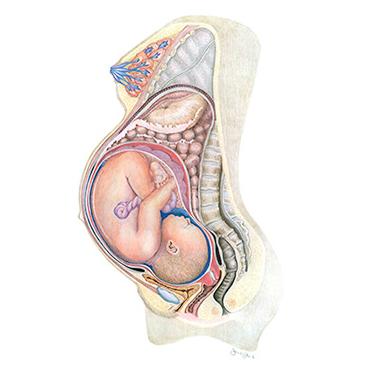
In selected situations, cesarean section is an invaluable and even life-saving procedure for mothers and babies. In such situations, almost everyone would agree that strong and compelling benefits of cesarean outweigh the downsides. In many other situations, the benefits of surgical birth for mothers and babies are smaller or questionable. In such cases, you will want to weigh anticipated benefits against the risks of a major surgical procedure as part of your decision making process.

What situations can lead to cesarean section?

The reasons for having a cesarean section fall into three general categories:
  • Urgent health situations: In a small portion of pregnancies, situations arise that pose an urgent threat to the health or life of the mother or baby. For example, if the mother is bleeding heavily (hemorrhage) or the baby isn't getting enough oxygen, a cesarean is needed. Such urgent situations can occur in pregnancy or while giving birth. This Pregnancy Topic doesn't cover the small proportion of situations when just about everyone would agree that a cesarean section is necessary.
  • Non-urgent health situations: More commonly, your OB GYN, family physician or midwife may recommend a cesarean section for a non-urgent situation involving a concern about your health or the health of your baby. These situations can occur in pregnancy or while giving birth. They increase your chances for having a c-section, but some women in these situations have a cesarean section and some have a vaginal birth. If a non-urgent cesarean is proposed before you are in labor, time is on your side. You have the opportunity to do your own research to learn more about the issues involved. This will help prepare you to discuss the issues with your doctor or midwife and your partner, and make your decision. The most common non-urgent reasons why a cesarean is proposed are discussed below.
  • Non-medical situations: In some cases, your caregiver may propose, or you may be considering, a cesarean section for reasons that have nothing to do with your health or your baby's health in the present pregnancy. In this case, it is important to make an informed decision with full understanding of the risks and benefits involved.

What key factors can affect whether I have a cesarean section or a vaginal birth?

The health needs of you and your baby can certainly influence whether you have a cesarean section or vaginal birth, but some other key factors include
  • your choice of caregiver and birth setting
  • your access to supportive care during labor, and
  • the medical interventions you experience while giving birth.

Cesarean rates in the U.S. can range from under 10% for some caregivers and birth settings to over 50% for others. This variation occurs for many reasons. One is that caregivers differ in the ways that they support women who are giving birth and in their judgment about when to recommend surgical birth ("practice style"). C-section rates also vary from one birth setting to another due to differences in policies and practice styles. Because of this variation, your choice of caregiver and choice of birth setting can have a major impact on the type of birth that you will have.

Why is the c-section rate higher than ever, and rising?

Many medical, legal, social and financial factors influence the cesarean rate. These include:
  • under-use of care that can enhance the natural progress of labor and birth, for example less emphasis on:
    • providing continuous labor support (by a trained or experienced companion)
    • encouraging women to be upright and moving during labor (not on their backs, a position that can inhibit labor)
    • ensuring that women are well-rested and well-nourished while giving birth
  • side effects of widely used medical interventions: the likelihood of c-section goes up, for example, when:
    • caregivers try to cause labor to start (labor induction)
    • caregivers use continuous electronic fetal monitoring (EFM) to check the baby's heart beats
  • the willingness of some caregivers to move to cesarean section before trying measures that may avoid the surgery, for example by:
    • failing to attempt to turn babies in a breech position (buttocks- or feet-first) to a head-first position in late pregnancy with hands-on-belly movements (external version)
    • failing to allow more time for a vaginal birth to occur due to pressures in understaffed hospitals and on busy caregivers
  • pressures on caregivers today to practice "defensive medicine," for example:
    • caregivers may feel that performing a cesarean section reduces their risk of being sued or of losing a lawsuit should complications occur
  • failure to offer women with a previous cesarean section a choice between VBAC (vaginal birth after cesarean) and repeat c-section:
    • more and more hospitals and caregivers are adopting a 'no-VBAC' policy, and a woman who wants a VBAC may be unable to have one due to these restrictions
  • loss of skills or unwillingness to offer vaginal birth to women in some situations, for example:
    • a woman who makes an informed choice to have a vaginal birth with a baby in breech position may have trouble finding a caregiver who is experienced and willing to attend such a birth
    • a woman who is expecting twins may have trouble finding a caregiver who is experienced and willing to attend the vaginal birth of twins
  • the growing perception that a cesarean section, and especially a planned (elective) c-section, is "safe":
    • although cesareans are safer now than before, the surgery still carries a broad range of short- and longer-term risks for mothers and babies
    • although planned cesareans offer some advantages in comparison with unplanned cesareans, the fact remains that surgery - planned or unplanned - poses a series of risks in comparison with vaginal birth.

These factors can increase your chances for having a cesarean. But, the section Tips & Tools: C-Section, offers many ideas for reducing the likelihood that they will come into play in your situation.

How does my right to "informed consent" or "informed refusal" relate to these matters?

Informed consent is a process to help you decide what will and will not be done to you and your body. In the case of maternity care, informed consent also gives you the authority to decide about care that affects your baby. The purpose of informed consent is to respect your right to self-determination. It empowers you with the authority to decide what options are in the best interest of you and your baby. Your rights to autonomy, to the truth (as best as it can be known at the time), and to keep yourself and your children safe and free of harm are basic human rights. As the person receiving care and mother of your baby, you are in the best position to decide what risks are important to you. (Learn more about informed consent.)

Whether you wish to plan a vaginal birth or a cesarean section, it is important to make this decision on the basis of complete, accurate, unbiased information.

How can I learn more about my specific situation?

Below you will find a brief discussion of the more common reasons why your doctor or midwife may recommend a non-urgent cesarean. Less common reasons are not discussed. Regardless of the reason why your caregiver might recommend a non-urgent cesarean, it is essential that you seek information beyond what is provided here. Your caregivers are an important source of this information. If your caregiver proposes a cesarean section, ask:
  • What is involved in having cesarean surgery?
  • What benefits do you believe c-section offers in my case?
  • What potential problems or disadvantages might there be?
  • What are the pros and cons of vaginal birth?

Your decision affects the likelihood that you, your baby and any future babies will experience dozens of risks. You can learn about these in the summary of research comparing risks of cesarean section and vaginal birth in Best Evidence: C-Section. Your caregiver can help answer questions about this information.

What are some non-medical (elective) reasons for cesarean section?

Concerns about pelvic floor disorders: You may be hearing that an elective cesarean section will prevent later-life problems with leaking urine (urinary incontinence) or leaking feces or gas (bowel incontinence). The research does not support this claim.

Current research suggests that pregnancy and some commonly used maternity practices (such as routine episiotomy, a surgical cut made just before birth to widen the opening of the vagina) can contribute to incontinence in the period after the birth. While research supports avoiding whenever possible maternity practices that can harm the pelvic floor, it does not support avoiding vaginal birth itself. In addition, studies find that birthing practices have their strongest effects in the recovery period in the first weeks and months after birth. These effects fall off quickly for nearly all women and disappear for nearly all by about age 50. Incontinence in later life seems to be related to other health and lifestyle factors such as excess weight and smoking.

You can find out more about problems with the belief that cesarean section protects the pelvic floor in Best Evidence: Pelvic Floor Dysfunction. You can learn more about how to prevent and relieve such problems in Tips & Tools: Pelvic Floor Dysfunction.

Profound fear of childbirth: A small proportion of women, both first-time and experienced mothers, have an extreme fear of childbirth. Certainly, almost every expectant mother experiences some degree of fear or apprehension, but here we are talking about something altogether different.

A series of counseling or psychotherapy sessions during pregnancy can help many women overcome their deep fears of vaginal birth and give birth vaginally. Continuous support during labor by a trained labor support companion (doula) may be of special value to a woman in this situation. (Options: Labor Support will give you information on doulas.) If you decide to seek counseling, be sure to get help from a trained individual who has both good counseling skills and an understanding of maternity issues.

If you still have deep fears of childbirth despite counseling, you may decide to have a cesarean birth. Be sure to talk this over with your caregiver as early as possible in your pregnancy, and work together to help ensure the safest possible and most satisfying birth.

Other rationale for "cesarean by choice": As attitudes toward cesareans become more casual, and as they are performed more "routinely," you may have thought about planning a cesarean for reasons of convenience. For example, you may wish to schedule your baby's birth date. Or you may think of a cesarean as a pain-free way to give birth. Or perhaps, if labor does not go as smoothly or as quickly as you would like, the idea of a cesarean may appeal to you or your caregiver even if there is no clear medical reason. Before going down this path, it is important to investigate whether this choice truly offers you what you believe it will (such as greater convenience or less pain). And it is also important for you to make an informed decision with full understanding of the trade-offs that are involved.

What are some situations where caregivers vary in whether or how often they recommend a cesarean section?

Previous cesarean section: Caregivers disagree about how a woman should give birth if she had a cesarean in the past. Some recommend planning a VBAC ("vee-back," vaginal birth after cesarean), while others recommend scheduling a repeat cesarean. The concern is with the fact that the woman's uterus has a scar, which can give way (rupture) in a future pregnancy or labor. On the one hand, having a repeat cesarean lowers the likelihood that a scar will open and create problems. A recent U.S. government evidence report estimates that for every 10,000 women who plan a VBAC, 1.4 babies will die due to scar problems during labor. On the other hand, a surgical delivery poses its own set of risks for mothers and babies, some of them also quite serious. As the number of previous cesareans goes up, some of the serious risks for any future pregnancies increase sharply.

If you've had a previous cesarean, you would do best to learn all you can about these and other trade-offs involved with this decision and discuss these matters thoroughly with your caregiver before making your decision. Be sure that your caregiver and any others who may be attending your birth agree with your decision.

Unfortunately, it's becoming harder to find a hospital and caregiver who will leave the choice in your hands. If you want to have a VBAC, you may need to search for a caregiver and hospital that will offer you this. In some communities, this may not be available.

To help pregnant women with a previous cesarean understand these matters and make their birth plans, this website has a complete Pregnancy Topic called VBAC or Repeat C-Section.

Prolonged labor or failure to progress: The length of labor varies from woman to woman. Your labor may be short, long, or somewhere in the middle. If your labor is taking longer than average, you may be told that you have prolonged labor.

Caregivers vary in how they might prevent or respond to a slow labor and in their degree of patience with a long labor. For example, some will try to rest the uterus or stimulate stronger contractions with drugs before turning to a cesarean. They may try such things as ensuring that the mother is getting enough fluids or encouraging her to change positions or walk around rather than lying flat on her back. Others will be quicker to turn to a cesarean. As long as you and your baby are doing well, there is no medical reason to decide on a cesarean. It's a good idea to talk with your caregiver, well before labor begins, about how he or she handles a long labor. Then you can think about what you might do if you are faced with this situation.

Taking a long time to get to the point when your cervix is open (dilated) to 4 centimeters or so says nothing about your ability to birth your baby vaginally. Slow or stalled labors after that (in active labor) are more concerning, but even in these cases, most women can have vaginal births.

Having continuous supportive care from a woman trained to help women in labor (doula), or a female friend or family member who is experienced with labor, can help you get through a long and challenging labor. This kind of support can also help meet your partner's needs and help your partner support you.

Baby in breech position: Nearly all babies will take up a head-first position by the end of pregnancy. When the baby is in a buttocks- or feet-first (breech) position, labor poses some increased risks for both mother and baby. Because a cesarean poses its own set of risks, you may want to find a caregiver who has hands-to-belly skills to turn the baby to a head-first position (external version) in the last weeks of pregnancy. Sometimes it is not possible to turn a baby with this technique, and sometimes a turned baby will flip back to a breech position. However, most women who try this technique will go into labor with the baby in a head-first position.

Should your baby continue in the breech position, most caregivers will recommend a cesarean. There are important advantages to cesarean in this situation in comparison with typical hospital ways of handling vaginal breech births, especially lower likelihood of death or serious problems for your baby. On the other hand, vaginal birth avoids risks of surgery for mothers and babies in the present pregnancy and has many advantages for mothers and babies in future pregnancies. (You can learn more about possible problems resulting from cesarean surgery in Best Evidence: C-Section.)

If you find yourself in this situation, you will want to discuss this matter with your caregiver and to learn all you can about these and other specific trade-offs involved with this decision. Be sure that you and your caregiver agree ahead of time about your birth plan. If you decide to plan a vaginal breech birth, it is important that your caregiver and any others who may be attending your birth have skills and experience with this type of birth.

Changes in the fetal heart rate: Changes in the fetal heart rate may signal a problem for the baby. In some situations, undesirable changes are easy to correct. For example, a doctor or midwife can ask a mother who is lying on her back to move to another position, give her oxygen or fluids, or lower a high dose of synthetic oxytocin (a hormone to strengthen contractions). When the fetal heart rate is very fast, very slow, or irregular, your caregivers may be concerned about the baby's condition. If this cannot be corrected and the baby is not about to be born, a cesarean may be recommended. However, electronic fetal monitors (EFM machines) often suggest that the baby is in trouble when this is not the case. Further testing can help identify which babies may need help.

Multiple births: Giving birth to more than one baby poses unique challenges. However, no well-done research currently supports routine delivery of twins by cesarean section. Most caregivers will recommend a cesarean when there are three or more babies. As always, it's important to learn as much as you can about the expected benefits and risks of cesarean compared with vaginal birth and discuss your individual situation with your caregiver before making your decision. If you are having twins and want to have a vaginal birth, you may need to seek out a caregiver who will support this.


Next >
Best Evidence: C-Section

Most recent page update: 2/21/2006


© 2010 Childbirth Connection. All rights reserved.

Childbirth Connection is a national not-for-profit organization founded in 1918 as Maternity Center Association. Our mission is to improve the quality of maternity care through research, education, advocacy and policy. Childbirth Connection promotes safe, effective and satisfying evidence-based maternity care and is a voice for the needs and interests of childbearing families.
News and Features : Health Professionals
New VBAC Guidlines
ACOG has just issued new Guidlines for VBAC. What changed? What continues?
 
We've Moved!
On July 1, 2010, the Childbirth Connection office moved to 260 Madison Avenue, 8th Floor, New York, NY  10016. All other contact information is unchanged.
 

"2020 Vision" and "Blueprint for Action" Reports Available
Collaboration of leaders from across the U.S. health care system contributed to two major direction-setting reports for improving the maternity care system.
Learn about Transforming Maternity Care project
Read the "2020 Vision"
Read the "Blueprint for Action"
Help implement Blueprint recommendations
Listen to report release event audio, 1/2010

Rising Maternal Mortality
Analysis of maternal mortality data for the state of California, with 14% of the nation's births, strongly suggests that maternal mortality is increasing in tandem with rising rates of cesarean section and obesity.
Read article about maternal mortality in California 
Read companion Q&A 

Sign up for one or both monthly eNews offerings from Childbirth Connection!

Join now!

Our Privacy Policy

 Find us on Facebook logo  Tweet with us on Twitter
@childbirth

Help Transform Maternity Care!Help Transform Maternity Care!
Please join our efforts to make quality maternity care a top national priority. Your support will help make the transformation possible.
View 2010 Supporter Roster 

Updated Maternity Care Statistics Available
A fact sheet summarizes U.S. maternity care trends and figures from the latest federal reports. A new table updates state-level maternity statistics. These update background information in the 2008 Milbank Report on Evidence-Based Maternity Care.
Get the fact sheet 
Get state-level statistics (PDF) 
Read Evidence-Based
Maternity Care
 

US Cochrane Center (USCC)/Consumers United for Evidence-based Healthcare (CUE)
Visit the USCC/CUE website for the latest pregnancy and childbirth systematic reviews.


Evidence-Based Maternity Care Report Released
A major new report takes stock of the U.S. maternity care system and finds great opportunities for improvement. Childbirth Connection collaborated with the Reforming States Group and the Milbank Memorial Fund to develop the report.
Learn more, get the report 
Read companion USA Today article
Read the USA Today article
Read the Consumer Reports story
Take the Consumer Reports quiz
Read Our Bodies Our Blog entry


New Mothers Speak Out National Report Released
The latest report in Childbirth Connection's Listening to Mothers series is now available. Get an eye-opening look at the reality of life as a mother of young children in the United States, based on national surveys conducted by Harris Interactive.
Learn more, get the report
Read the Wall Street Journal story and listen to the podcast
Download Quick Facts (PDF)

Why does the national U.S. c-section rate keep going up?
Current research points to an optimal cesarean section rate of 5% to 10%, but 1 pregnant woman in 3 is giving birth by major surgery in the United States. Why the surge and is this safe? A new page - and a PDF handout for journalists, policy makers, students and others - answer these questions.
Read more about the rising cesarean section rate rising national cesarean section rate

New Content!
March/April 2009 evidence column is now available.
Features: National Quality Forum endorses consensus perinatal performance measures; systematic reviews on induction of labor, environmental tobacco smoke and fetal health, and HPV infection and cervical neoplasia
Get the column
Popular Pages
comfort in labor by penny simkin

Comfort in Labor, by Penny Simkin
Penny Simkin, the internationally recognized leader in childbirth education and labor support, shares her wisdom with women, including comfort measures, effective positions, and tips for partners and doulas.
Download Comfort in Labor (free PDF) listening to mothers
Every woman has the right to unrestricted access to all available records about her pregnancy, her labor, and her infant; to obtain a full copy of these records; and to receive help in understanding them, if necessary.