
![]() |
![]() |
|
|
|
|
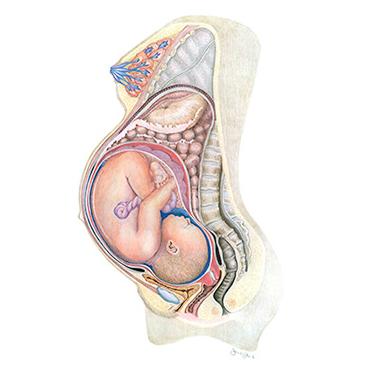
Effect of Elective C-SectionHow does pregnancy affect pelvic floor dysfunction? Is there a sound scientific basis for the claim that having an elective c-section protects the pelvic floor? Does elective c-section have any long-term protective effects against incontinence? What factors do contribute to urinary incontinence later in life? Do women who have c-sections ever have urinary or bowel problems after delivery? Will elective c-section prevent sexual dissatisfaction during intercourse or uterine prolapse? If I had an anal muscle tear at my last birth, should I plan a cesarean section to prevent a repeat injury? Are there any circumstances when I might wish to consider elective c-section? In recent years, the claim has been made that planned cesarean section will prevent pelvic floor problems. These include concerns such as urinary stress incontinence (leaking urine with increased abdominal pressure such as when coughing, laughing, sneezing, or lifting a heavy object), bowel incontinence (leaking gas or — more rarely — feces, or a sense of urgency about elimination), sexual dissatisfaction, and uterine prolapse (sagging of the uterus). However, as you will see below, a closer examination of the issue reveals many problems with this claim. It is also important to consider the considerable offsetting risks of having cesarean surgery, which you can find in detail in Options: C-Section. How does pregnancy affect pelvic floor dysfunction?Pregnancy is a major factor in developing urinary stress incontinence. Many women who leak urine when they cough, laugh, sneeze, or lift heavy objects begin having the problem late in pregnancy. This is probably the result of the extra weight of the uterus and baby on the pelvic floor.Most women who experience urinary incontinence in pregnancy continue to have it after birth as well. Almost all women, though, will recover in the months after birth. Very few women still have serious problems 6 months to a year later. You can reduce the likelihood of having urinary incontinence by undertaking a program of pelvic floor exercises (kegel exercises) in pregnancy or after your birth. These can help prevent, relieve, or reduce urinary incontinence. Is there a sound scientific basis for the claim that having an elective c-section protects the pelvic floor?Not at this time. The medical studies cited in support of claims that elective cesarean will prevent urinary and bowel incontinence have many flaws. These include:
Does elective c-section have any long-term protective effects against incontinence?A very few women, perhaps 3 in 100, who had vaginal births will still be experiencing bothersome symptoms 6 months or more after birth. However, studies have failed to find any differences between vaginal birth and cesarean delivery after about age 50. This holds true even though virtually all women who had their babies before the mid-1970s had large episiotomies. Many also had routine forceps deliveries. In fact, a study of elderly nuns found that even women who have never been pregnant or given birth have high rates of urinary incontinence late in life.What factors do contribute to urinary incontinence later in life?Factors that do appear to affect urinary incontinence in later life include excess weight, use of hormone replacement therapy (HRT), having a hysterectomy (surgery for removing uterus), smoking, repeated urinary tract infections, diseases such as diabetes, and diseases that affect mobility or mental ability such as arthritis or Alzheimers. Fortunately, many of these factors are within your control.Do women who have c-sections ever have urinary or bowel problems after delivery?Some women who have cesarean sections report urinary and bowel problems in the days and weeks after delivery. Listening to Mothers, a national Childbirth Connection survey, found that women who had had cesareans were more likely to complain of all types of urinary or bowel problems than women who had had vaginal births.Will elective c-section prevent sexual dissatisfaction during intercourse or uterine prolapse?Some arguing in favor of elective c-section also claim this will keep the uterus and other inner organs from sagging into the vagina (prolapse) and avoid the possibility an unsatisfactory sex life caused by loose muscles around the vagina. However, no study of cesarean versus vaginal birth appears to have looked at these issues. Moreover, if such a study were done, it would have to avoid the weaknesses listed above before it could be considered valid.As for sexual dissatisfaction, the greater likelihood of ill health and longer recovery that follows surgical delivery (vs. vaginal birth), the tender abdominal wound, and the possibility of developing internal scar tissue (adhesions) and ongoing pelvic pain all have the potential to interfere with sexual relations. If I had an anal muscle tear at my last birth, should I plan a cesarean section to prevent a repeat injury?As tears into the anal muscle are painful and can lead to bowel incontinence, it is important to avoid them. If you don't have an episiotomy this time around, your chances of having a repeat anal muscle tear with a vaginal birth are 1 in 50 or less. You will also want to weigh the risks of cesarean section against the risks of a repeat anal muscle tear. This website's Pregnancy Topic on cesarean section includes a detailed comparison of the risks of cesarean and vaginal birth in Best Evidence: C-Section .Are there any circumstances when I might wish to consider elective c-section?A difficult vacuum extraction or forceps delivery would increase your risk for pelvic floor injury. If faced with a difficult assisted delivery toward the end of labor, you may prefer to assume the risks of cesarean section.If you had a c-section in the past, this website has a Pregnancy Topic to help you understand your options, make your birth plan, and reach your goals called VBAC or Repeat C-Section. If you have not had a c-section and are considering planning one now, the VBAC or Repeat C-Section topic can help you understand issues you would face in future pregnancies with a previous cesarean. Most recent page update: 2/21/2006
© 2013 Childbirth Connection. All rights reserved.
Childbirth Connection is a national not-for-profit organization founded in 1918 as Maternity Center Association. Our mission is to improve the quality and value of maternity care through consumer engagement and health system transformation. Childbirth Connection promotes safe, effective and satisfying evidence-based maternity care and is a voice for the needs and interests of childbearing families. |
News and Features
Listening to MothersSM III: New Mothers Speak Out (June 2013) reports on new national surveys about issues women face in the postpartum period and their views about maternity care.
Access the full report and supplementary materials ![]() Listening to MothersSM III (May 2013) is the third national survey exploring women's experiences in pregnancy and childbirth. Commissioned by Childbirth Connection, conducted by Harris Interactive, and funded by the W.K. Kellogg Foundation, the survey polled 2,400 women who gave birth in U.S. hospitals from 2011 to 2012. Results show that medically intensive experiences are typical, and evidence-based practices are underutilized. Childbearing women need better support and knowledge to navigate their maternity care. Access the full report and supplementary materials ![]() New Report: Maternity Care and Liability Go to report and supporting materials ![]() New Report: The Cost of Having a Baby in the United States Go to report and supporting materials ![]() New Cesarean Resources: Go to Best Evidence Report ![]() Go to web pages and booklet for women ![]()
For 95 years, Childbirth Connection has been dedicated to improving the
quality and value of maternity care for all women and their families. Learn
more about our rich history through our interactive
timeline and give
$95 for 95 in honor of
our 95th birthday.
Childbirth Connection works to ensure that all women and babies get the best
possible maternity care. We have the collective vision and we know how to get
there, but we can't do it alone. Join the transformation
today.
The Transforming
Maternity Care website focuses on maternity care
system improvements designed to engage diverse stakeholders in quality
improvement efforts. The site offers full access to the landmark reports 2020 Vision and
Blueprint for
Action, features a Blog, and other
resources such as an Action Center, a
database of
quality improvement projects, an interactive data
center, and many more tools
for advocates and stakeholders.
Help Transform Maternity Care! |