
Send to a Friend   Printer Friendly   Save in My Connection   

Prenatal Care Visits in the Third Trimester


Prenatal visits to your health care provider may be scheduled more frequently.

You can expect your health care provider to check the following:
  • Your weight, blood pressure, and urine
  • Fetal heartbeat
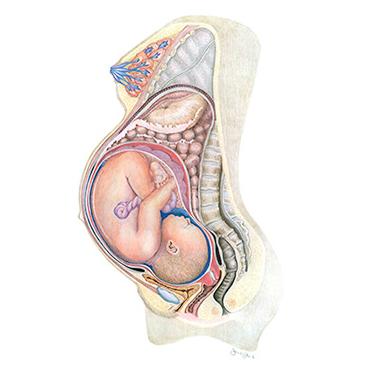
  • Size and position of the fetus
  • Height of the fundus
  • Your feet, hands, ankles, wrists, and face for swelling
  • Any varicose veins and/or hemorrhoids

After the 32nd week of pregnancy, your health care provider will also check:

  • How often you've been experiencing Braxton Hicks contractions
  • Whether or not the baby's head has “engaged” (whether her head has settled deeply into your pelvis)
  • The state of your cervix
Always feel free to call your health care provider if you have any questions or concerns. Find out how to reach her after hours, and whether there is a special time during the day that is set aside for phone calls. If you have any symptoms that seem unusual, or very sudden, be sure to call your health care provider right away. Refer to these warning signs for symptoms that indicate there may be a medical problem. While there is no need to panic, the best treatment starts with communication!

Continue to "Planning for Bringing Baby Home" journey to parenthood

journey to parenthood booklet
Journey to Parenthood is available
as a book in our bookstore.


Most recent page update: 1/30/2008


© 2010 Childbirth Connection. All rights reserved.

Childbirth Connection is a national not-for-profit organization founded in 1918 as Maternity Center Association. Our mission is to improve the quality of maternity care through research, education, advocacy and policy. Childbirth Connection promotes safe, effective and satisfying evidence-based maternity care and is a voice for the needs and interests of childbearing families.
News and Features

"2020 Vision" and "Blueprint for Action" Reports Available
Leaders from across the U.S. health care system have prepared several reports for improving the maternity care system.
Learn about Transforming Maternity Care project
Read the "2020 Vision"
Read the "Blueprint for Action"
Read the Consumer Workgroup report
Help implement Blueprint recommendations

Rising Maternal Mortality
Analysis of maternal mortality data for the state of California, with 14% of the nation's births, strongly suggests that maternal mortality is increasing in tandem with rising rates of cesarean section and obesity.
Read article about maternal mortality in California 
Read companion Q&A 

Maternity Care Fact Sheet Available
A new fact sheet (12/09) summarizes U.S. maternity care trends and figures from the latest federal reports. The fact sheet updates background information in the 2008 Milbank Report on Evidence-Based Maternity Care.
Get the fact sheet 
Read Evidence-Based Maternity Care 

US Cochrane Center (USCC)/Consumers United for Evidence-based Healthcare (CUE)
Visit the USCC/CUE website for the latest pregnancy and childbirth systematic reviews.

Maternity Care, a Major Segment of Health Industry, Must Be Overhauled for Health Care Reform to Succeed
As competing interests work out the particulars of health care reform, Childbirth Connection reminds the nation that rapid gains in the quality, cost, and value of maternity care are achievable.
Read the press release (PDF)

National Policy Symposium Honors Childbirth Connection's 90th Anniversary

Nearly 250 leaders deliberated about Transforming Maternity Care in Washington DC in April 2009.
Learn about symposium, next steps
See 90 years of milestones for women and families (PDF)

Seton Family of Hospitals Receives First Maternity Quality Matters Award
Childbirth Connection presented its inaugural Maternity Quality Matters Award to an organization that is achieving significant gains for women and newborns.
Learn more about award winner

Maternity Care Priorities in Health Care Reform

Childbirth Connection has issued a statement about health care reform priorities for a high quality, high value maternity care system.
Read the statement (PDF) 

Evidence-Based Maternity Care Report Released
A major new report takes stock of the U.S. maternity care system and finds great opportunities for improvement. Childbirth Connection collaborated with the Reforming States Group and the Milbank Memorial Fund to develop the report.
Learn more, get the report 
Read companion USA Today article
Read the USA Today article
Read the Consumer Reports story
Take the Consumer Reports quiz
Read Our Bodies Our Blog entry

eNews Sign Up
Occasional news on maternity care research and other useful info.
*

Our Privacy Policy
 Find us on Facebook logo  Tweet with us on Twitter
@childbirth

Help Transform Maternity Care!
Help Transform Maternity Care! Please join our efforts to make quality maternity care a top national priority. Your support will help make the transformation possible.
View 2009 Supporter Roster 

New Mothers Speak Out
National Report Released

The latest report in Childbirth Connection's Listening to Mothers series is now available. Get an eye-opening look at the reality of life as a mother of young children in the United States, based on national surveys conducted by Harris Interactive.
Learn more, get the report
Read the Wall Street Journal story and listen to the podcast
Download Quick Facts (PDF)
New Content!
journey to parenthood
Journey to Parenthood
Full Book Available Online!

A family-friendly book covering the trimesters, pregnancy resources, and the latest information on baby's first year of development. Available online (free) and for purchase in the Bookstore.
Browse through Journey to Parenthood childbirth connection journey to parenthood
Buy this book and learn more journey to parenthood in bookstore
"As much as you want the baby to be born, try to enjoy your time being pregnant--it may never happen again, and you will not get much quiet time for a while."
-Listening to Mothers® survey participant
Every woman has the right to choose a midwife or a physician as her maternity care provider. Both caregivers skilled in normal childbearing and caregivers skilled in complications are needed to ensure quality care for all.